Caught on Camera in Waterstown: How Our Local Venues Keep Going Viral (And Why Nobody's Surprised)
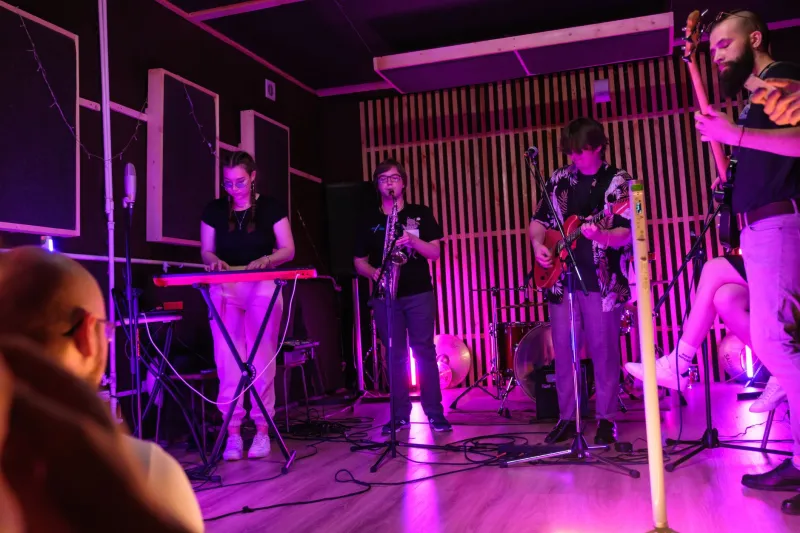
That Clip You Saw Last Month? Yeah, That Was Us.
If you've spent any time on TikTok or Instagram Reels lately, there's a decent chance you've stumbled across a video that made you stop mid-scroll and think, where is that place? Maybe it was a singer absolutely losing herself in a song at what looked like somebody's converted barn. Maybe it was a crowd of maybe forty people singing backup like their lives depended on it. Maybe it was a comedian landing a joke so perfectly local that somehow the entire internet got it anyway.
Chances are, it came from somewhere like Waterstown.
There's a pattern developing across small American towns, and our little corner of it is right at the center of it. Intimate venues — the kind with mismatched chairs, exposed brick, and a sound system that's seen better days — are quietly becoming the most reliable factories for the kind of viral content that polished, big-budget productions keep failing to manufacture.
So what's actually going on here?
The Unpredictability Problem (That Turns Out to Be a Superpower)
Talk to anyone who runs a local venue and they'll tell you the same thing: stuff goes sideways all the time. A mic cuts out. The opening act runs long. Someone's kid wanders onto the stage. A performer breaks character to call out their high school teacher sitting in the third row.
In a major arena or a corporate entertainment complex, those moments get smoothed over fast. There are protocols. There are PR people. There are systems designed to make everything feel seamless.
At a place like the Hollow Creek Room or the back patio at any number of Waterstown's community spaces? Those moments live. And increasingly, they live online.
"I've had headliners at big venues tell me they envy what happens here," said one local venue manager who's been running shows in Waterstown for over a decade. "They've got production budgets we couldn't dream of, but their audiences are just watching. Our audiences are in it. And cameras pick that up immediately."
That difference — between watching and being in it — is the thing that algorithms apparently love. Engagement metrics reward content that makes viewers feel something real, and real tends to happen in rooms where nobody's performing for a camera.
Content Creators Are Figuring This Out
Ask any of Waterstown's growing community of local content creators and they'll tell you their best-performing videos almost never come from the nights they planned to film something great.
"I went to a show last spring just because a friend was playing," said one local creator who's built a solid following documenting Waterstown's entertainment scene. "I had my phone out because I was going to post one story and go home. Two songs in, this thing happened between the performer and someone in the audience — I can't even fully explain it — and I just kept filming. That clip hit over 200,000 views in four days. My most 'produced' video from a big regional festival that same month got maybe 3,000."
The math keeps working out the same way. Low production value plus high emotional authenticity consistently outperforms high production value plus low emotional risk.
And small-town venues run on emotional risk by default. There's no safety net of anonymity. The performer might know half the crowd personally. The crowd might know every word to a song the artist wrote about their own street. That kind of intimacy creates pressure, and pressure — when it releases — creates moments.
Why Big Cities Can't Just Copy This
Here's the thing that nobody in a major entertainment market wants to admit: you can't manufacture this. Cities have tried. "Intimate venue experiences" get packaged and sold as premium tickets. "Authentic" becomes a brand aesthetic. The moment something gets optimized for virality, it loses the quality that made it shareable in the first place.
Waterstown doesn't have that problem — not because we're doing anything strategically brilliant, but because we're just doing what communities do. People show up to support each other. Performers take risks they wouldn't take on a bigger stage because the stakes feel lower and the room feels safer. Audiences respond because they're not passive consumers; they're neighbors.
That ecosystem doesn't scale. It doesn't export. It only exists because of the specific web of relationships and history that a place like ours has built over years.
"You'd have to build an entire community from scratch to replicate what happens at our best shows," said one local performer who's played venues ranging from Waterstown backyards to mid-size regional stages. "And by the time you did that, it wouldn't be a replication anymore. It'd just be another small town doing its thing."
The Moment That Actually Goes Viral Is Never the One You Planned
There's a useful lesson buried in all of this, and it applies way beyond entertainment.
The moments that resonate — that make strangers stop scrolling, share without thinking, and feel something they weren't expecting to feel — are the ones that nobody staged. They're the product of real people in real rooms having real experiences together.
Waterstown has those rooms. We've always had them. What's changed is that the rest of the world now has a direct line to watch what happens inside them.
So next time you see a clip blowing up from some cozy, low-lit venue where the crowd looks more like a living room than a concert hall — come find us. There's a decent chance we know the person holding the phone.