Open Mic Roots: How Small-Town Stages Are Growing the Artists Big Cities Wish They'd Found First
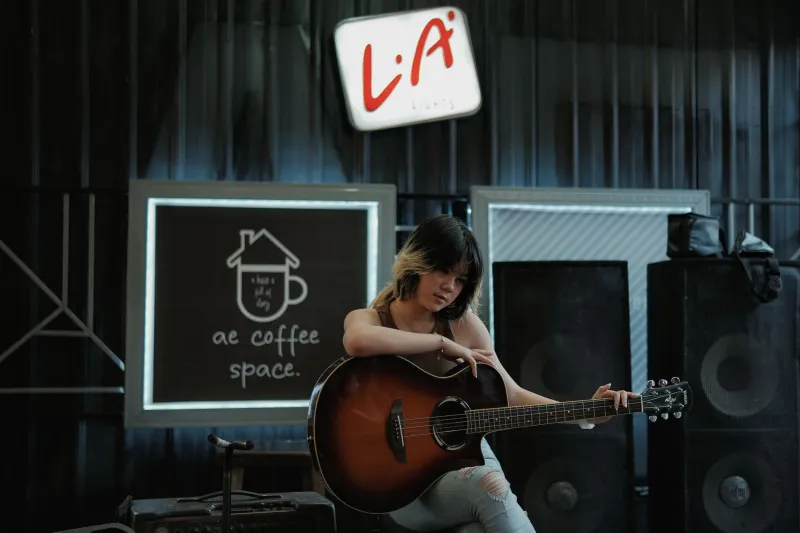
Forget the packed Brooklyn bar or the LA showcase with a $20 cover — some of the most exciting creative talent in the country is getting its start on stages you've probably never heard of. Right here in towns like Waterstown, local venues are doing something the big leagues simply can't replicate. We talked to the musicians, painters, and venue owners making it happen.
The Stage That Doesn't Scare You Off
Walk into a big-city open mic night and you're competing against fifty other acts, a distracted bartender, and an audience that's mostly just waiting for their friend to go on. The stakes feel enormous and the feedback loop is almost nonexistent. Now imagine walking into a coffee shop where the owner knows your name, half the crowd watched you grow up, and the person sitting at the corner table just happens to play bass and is looking for a collaborator.
That's the Waterstown experience — and it's not an accident.
"There's no velvet rope here," says Marcus Tillman, who owns The Grounds, a coffee-and-community space that hosts live music every Friday night. "If someone wants to get up and try something, we make room. That's always been the philosophy. You can't build a local arts scene if you're gatekeeping who gets to participate."
Tillman started hosting musicians about three years ago, initially just to fill a quiet evening. What he didn't expect was that the room would become something of a creative greenhouse. Three of the acts that debuted at The Grounds have since released original EPs. One, a singer-songwriter named Delia Marsh, was recently featured on a regional Spotify playlist with over 40,000 followers.
"I played my first original song here," Marsh told us, laughing a little. "I was terrified. But people actually listened. They came up to me afterward and asked real questions about the lyrics. That doesn't happen at a bar in Nashville where nobody knows you."
Built-In Audiences Are a Bigger Deal Than Anyone Talks About
One of the quietly underrated advantages of performing in a small town is something marketing professionals would call a "warm audience" — and what the rest of us just call community.
When a local artist performs in Waterstown, the crowd isn't a room full of strangers scrolling their phones. It's neighbors, former teachers, the woman who runs the hardware store, the guy who coaches Little League. These are people who have a genuine personal investment in seeing someone they know succeed. That energy is palpable, and for emerging artists, it's genuinely transformative.
"Playing for people who are rooting for you changes how you perform," says Jordan Vega, a multi-instrumentalist who grew up in a small town similar to Waterstown and credits local venues with giving him the confidence to eventually tour regionally. "You stop performing at an audience and start performing with them. That's a skill you can't learn in front of a cold crowd."
The psychological safety of a supportive local audience also means artists are more willing to take creative risks — to try the weird song, to experiment with a new genre, to fail publicly and come back the following week without shame.
Collaboration Happens Faster When Everyone's in the Same ZIP Code
In major metro areas, creative collaboration often requires a lot of coordination — scheduling across neighborhoods, navigating social media DMs with strangers, auditions with gatekeepers in the middle. In smaller towns, the network is compressed in a way that makes organic collaboration almost inevitable.
At Waterstown's monthly art walk, for example, it's common to see a local photographer's work displayed alongside original music performed live by someone who just met the photographer two weeks ago at a community potluck. These aren't arranged partnerships brokered by an agent. They're just what happens when creative people share the same physical space regularly.
"I met my current bandmate at a chili cook-off," says drummer Priya Okonkwo, deadpan, before breaking into a grin. "We're playing a festival in Ohio this summer. It started because we were both reaching for the same cornbread."
Venue owners in small towns also tend to wear multiple hats — booking, promotion, mentorship — in ways that create unusually direct lines between artists and opportunities. Marcus Tillman, for instance, personally introduced Delia Marsh to a regional promoter who happened to be passing through town. That introduction wouldn't have happened in a larger city where the transactional distance between artists and industry is much greater.
The Low Barrier Is Actually a Feature, Not a Bug
In entertainment industry circles, "low barrier to entry" sometimes gets treated like a warning sign — like it means the quality isn't there. But the creative communities growing in small towns are flipping that assumption on its head.
When it's easy to get on a stage, more people try. When more people try, you get a wider range of voices, styles, and stories. And when a community shows up consistently to support those voices, you end up with a creative culture that's genuinely diverse and deeply rooted — not curated from the top down.
"We've had a 70-year-old woman debut a one-woman show about her late husband," says Tillman. "We've had a 16-year-old kid perform original rap lyrics. We've had a middle school art teacher show oil paintings she'd been hiding in her garage for fifteen years. None of them would have walked into a gallery opening in a big city and asked for wall space. But here, the door was open."
That openness is exactly what makes small-town venues so valuable to the broader cultural landscape. They're not just entertainment spaces. They're incubators, confidence-builders, and community anchors all at once.
And if the artists who get their start here eventually head to bigger stages? Well, Waterstown will be proud — and will probably take at least a little credit.