When You Know the Star: Why Watching Someone You Know Perform Hits Completely Different
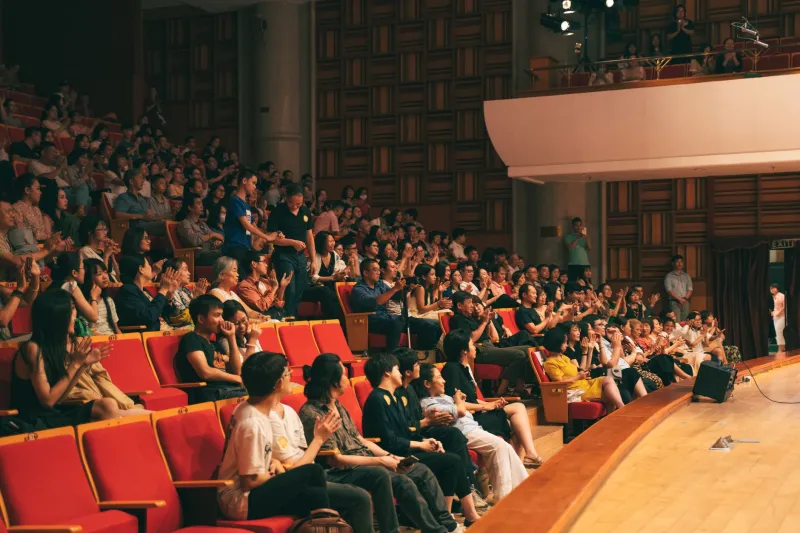
There's a specific kind of electricity that runs through a small-town theater when the lead actor is someone you went to high school with, or the musician on stage is your neighbor's kid who used to mow your lawn. It's not nostalgia exactly — it's something more interesting than that. And it's quietly changing what people actually want from entertainment.
The Anonymous Audience Is Starting to Feel Like a Rip-Off
Let's be honest about what mainstream entertainment has become. You stream a show, the algorithm recommends another, you watch that one too, and three hours later you couldn't tell a stranger much about how any of it made you feel. The content was fine. The production was polished. But something was missing.
What was missing, increasingly, is stakes. Personal stakes. The kind you only get when the person performing in front of you is someone whose life you've actually witnessed in some small way.
Residents of towns like Waterstown have been sitting with this truth for a long time, even if they didn't have language for it. When the community theater puts on its fall production, people don't just show up out of civic obligation. They show up because they know that the woman playing the lead also runs the bakery on Main Street, and watching her transform into a character is genuinely surprising and moving in a way that watching a professional actress on a screen simply isn't.
"I've seen every production our local theater has done for the past nine years," says Waterstown resident Carol Pietersen, 54. "Is it always technically perfect? No. But I've cried at almost every single one. Because I know these people. I know what they had to overcome to get up there."
The Psychology of Proximity
There's actually some real science behind why knowing a performer changes how we experience their work. Psychologists call it "parasocial" connection when we feel close to celebrities we've never met — but what happens in small towns is something more direct and arguably more meaningful: actual social connection.
When you have genuine history with a performer, your brain processes their vulnerability differently. Their courage on stage reads as courage because you know what the backstage version of their life actually looks like. You know they were nervous. You know they almost quit. You know they practiced in their garage every night for six weeks.
"It's the difference between watching someone run a race on TV and watching your friend run a race," says Jamie Holloway, a local high school drama teacher and occasional performer. "The athletic performance might actually be better on TV. But your heart isn't in it the same way."
This isn't a small-town phenomenon invented out of necessity. It's a deeply human preference that big-city, big-budget entertainment has spent decades engineering us to forget — and that communities like Waterstown have quietly preserved.
Entertainment as a Two-Way Relationship
One of the things that gets lost in the Netflix-and-scroll era is the idea that entertainment can be reciprocal. In Waterstown, when a local musician finishes a set at The Grounds or the community center, they don't disappear behind a green room door. They sit down at the next table over. You can tell them what the second song did to you. They can ask if you're okay, because they could see from the stage that something landed.
That feedback loop — performer to audience, audience back to performer — creates an entirely different quality of experience for everyone involved.
"I've changed songs based on conversations after shows," says local musician and Waterstown native Delia Marsh. "Someone told me the bridge of one of my songs reminded them of losing their dad. I went home and rewrote it. That would never happen if I was just posting to Spotify and reading comments from strangers."
For audiences, this reciprocity breeds a kind of loyalty and investment that streaming platforms spend millions of dollars trying to manufacture through recommendation algorithms. In a small town, it just happens naturally because the artist is also your neighbor.
The Indie Creator Parallel
It's worth noting that this dynamic isn't exclusive to physical small towns anymore — it's part of why certain indie creators on YouTube and Substack have developed such devoted followings. The audiences who stick with a creator through early, rough-around-the-edges content and watch them grow are experiencing a version of the same thing Waterstown residents feel when they watch a local artist develop over years.
But here's the difference: in a town like Waterstown, that journey happens in three dimensions. You run into the artist at the grocery store. You see them having a hard week. You notice when they seem more confident than they did six months ago. The intimacy is real, not performed.
"I follow a few creators online who I feel like I know," admits Carol Pietersen. "But it's not the same as actually knowing someone. When I watch someone I actually know perform, I feel like I'm part of the story. Online, I'm still just watching."
What This Means for the Future of Entertainment
The entertainment industry has been puzzling over declining engagement with traditional media for years. Ticket sales fluctuate, streaming fatigue is real, and audiences are harder to hold than ever. But what's happening in small towns like Waterstown might offer a clue about what people are actually hungry for.
They're not necessarily hungry for better production quality or bigger budgets or more content. They're hungry for meaning — and meaning, it turns out, is most reliably found in proximity to people whose lives you can actually see.
Local theater, community concerts, art walks where you can talk to the artist — these aren't consolation prizes for people who can't afford a trip to Broadway. For a growing number of people, they're the main event.
And if you've ever watched someone you know step into a spotlight and give everything they've got, you already understand why.