Bedroom Studios and Big Breaks: How Small-Town Sound Engineers Are Rewriting the Rules
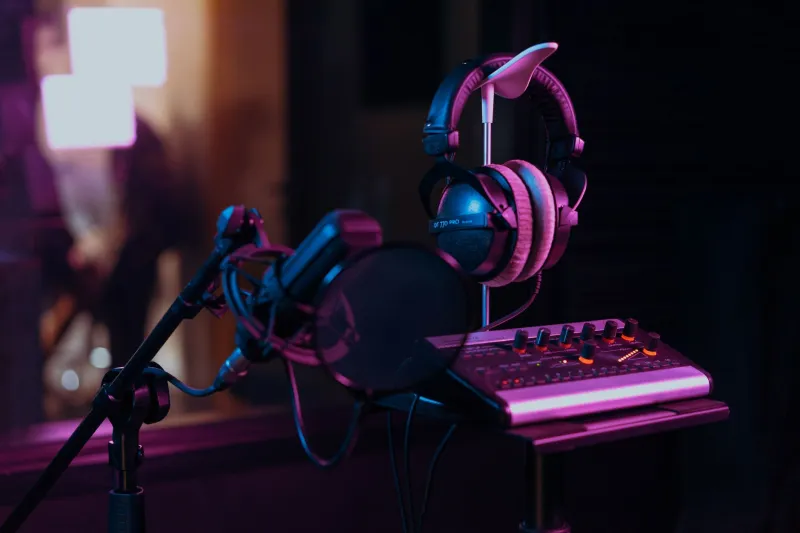
For decades, the music industry ran on a pretty simple assumption: if you were serious about making it in audio production, you packed your bags and headed to Los Angeles, Nashville, or New York. Those cities had the studios, the connections, and — supposedly — the only stages worth standing on. But something has quietly shifted, and places like Waterstown are at the center of it.
Call it the home studio revolution. Call it the great decentralization of sound. Whatever you name it, the result is the same: talented producers and engineers are building serious careers right here, far from the industry gatekeepers who used to hold all the cards.
The Math Just Works Differently Here
Let's start with the obvious: money. In Los Angeles, a modest one-bedroom apartment near any kind of creative district will run you $2,500 a month on a good day. Studio time at a mid-tier facility? Anywhere from $75 to $200 an hour. For an independent producer just starting out, those numbers are brutal.
In Waterstown, the math looks completely different. Rent is manageable. Garage space, basement rooms, and spare bedrooms become functional recording environments without requiring a small business loan. Local producer Marcus Delray, who's been building his home setup for the past four years, put it plainly: "I've got acoustic panels on walls I actually own the lease on. I can work at 2 a.m. without worrying about hourly rates ticking up. That freedom changes everything about how you create."
Marcus has placed tracks with three independent artists in the last two years — none of them local — and built those relationships entirely through online platforms and word-of-mouth. His Waterstown zip code has never come up as a problem.
Tight Communities, Honest Feedback
There's another advantage to small-town production life that doesn't show up in a spreadsheet: the creative community here is genuinely tight. In a big city, producers are often competing for the same clients, the same sessions, the same limited spotlight. That competition can breed secrecy and a reluctance to collaborate.
Here, it's different. When sound engineer Priya Okonkwo started doing live mixing for local venues about three years ago, she quickly found herself in a network of musicians, producers, and event organizers who were openly sharing knowledge. "Someone would hear a mix I did and just come up and tell me what worked and what didn't," she said. "Not in a harsh way — in a way that made me better fast. You don't always get that in bigger scenes where everyone's guarding their technique."
Priya now does remote mixing work for podcast clients across the country and recently finished post-production audio for a short film that premiered at a regional festival. She credits the feedback loop she found in Waterstown as the thing that accelerated her learning curve more than any online course could.
Major Labels Are Finally Looking This Way
Here's where things get genuinely interesting. The streaming era changed what a "discovery" looks like for record labels and talent scouts. You no longer need to be playing the Troubadour in West Hollywood to get noticed. A track that pops on Spotify or TikTok doesn't come with a geographic tag that tells listeners whether it was made in a million-dollar studio or a converted spare room in a small American town.
Labels know this. A&R scouts who once only attended showcases in major metros are now following SoundCloud pages and Instagram accounts tied to producers from places they'd previously never considered. The quality of the work is doing the talking, and increasingly, that quality is coming from people who chose affordability and creative freedom over industry proximity.
Local producer and multi-instrumentalist DeShawn Ferris recently had a song he produced picked up for licensing by a mid-size sync agency — the kind of placement that gets music into TV shows and commercials. He did the entire project in a room he built out himself over two summers. "The client didn't ask where my studio was," DeShawn laughed. "They asked if I could deliver in two weeks. That's the new conversation."
The Gear Gap Has Closed
Part of what makes all of this possible is how dramatically recording technology has democratized in the last decade. Professional-grade digital audio workstations, high-quality microphones, and studio monitors that would have cost tens of thousands of dollars in the 1990s are now accessible to anyone willing to research and save up. The gap between a home setup and a commercial studio, while still real, is narrower than it has ever been.
Producers in Waterstown are taking full advantage. Home setups here range from modest but functional rigs to surprisingly sophisticated environments with proper acoustic treatment and outboard gear. The investment is real, but it's a one-time build rather than an ongoing overhead drain.
What This Means for Waterstown
Beyond individual career wins, there's something bigger happening here. A growing community of audio professionals creates its own gravity. Musicians want to record where producers are. Producers attract more musicians. Events get better sound. Local artists level up. The whole creative ecosystem rises.
For Waterstown, that's not just a nice story — it's an actual shift in what this community is becoming. The next time you're at a local show and the mix sounds surprisingly polished, or you hear a track from a Waterstown artist that sounds like it belongs on a major playlist, there's a good chance someone just down the road put that together in a room they built themselves.
And they probably didn't need a Los Angeles area code to make it happen.