Small Stage, Big Feeling: The Real Science Behind Why Hometown Venues Hit Harder
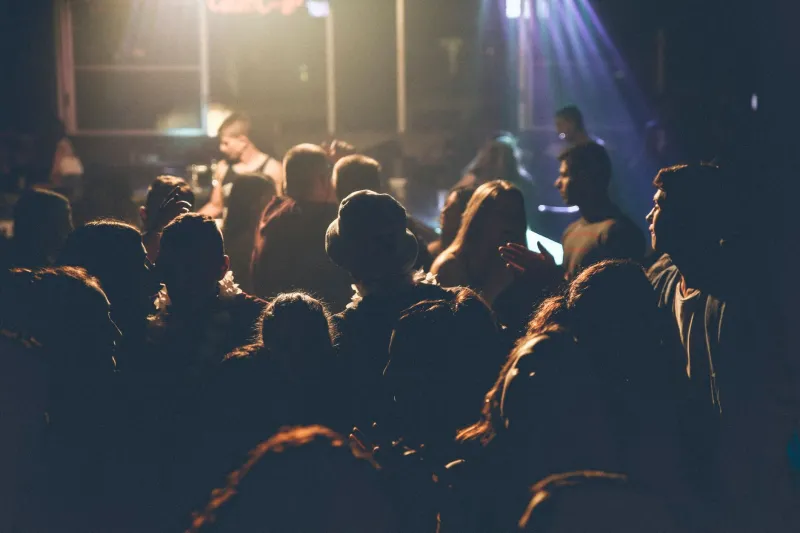
You've been to both. The massive arena where your favorite artist is a tiny glowing speck surrounded by a jumbotron version of themselves. And the cozy local venue where the performer looked you in the eye mid-chorus, where you could hear the pick hit the guitar string, where the whole room seemed to exhale together at exactly the right moment.
One of those experiences sticks with you. The other kind of fades.
There's a growing body of research — and a whole lot of lived experience right here in Waterstown — explaining why intimate venues don't just feel different. They actually are different, in ways that matter for artists, audiences, and the long-term health of music culture.
The Psychology of Proximity
Let's start with the basics. When you're close to a performer — and we're talking close enough to read their expression, not just their silhouette — your brain does something pretty remarkable. Neuroscientists who study live performance have found that audiences in smaller rooms show higher levels of what's called "neural synchrony," meaning the brain activity of the crowd starts to mirror that of the performer. You're not just watching someone feel something. You're feeling it alongside them.
In a 70,000-seat arena, that kind of connection gets diluted fast. The performer becomes a symbol rather than a person. The experience shifts from communion to spectacle.
"There's a wall that goes up the moment you need a screen to see someone's face," says local singer-songwriter Dani Pryce, who has played both the Waterstown Acoustic Lounge and a few festival stages big enough to make her nervous. "I can feel the difference from the stage. In a small room, I'm not projecting at people — I'm talking to them. That changes everything about how I perform."
What Performers Actually Do Differently
This isn't just an emotional observation. Artists genuinely adjust their craft in intimate settings, often in ways they don't even consciously plan.
Take dynamics. In an arena, everything has to be big to read — the gestures, the vocal swells, the dramatic pauses. Subtlety gets eaten by square footage. But in a room where the front row is close enough to make eye contact, a performer can drop to a near-whisper and have it hit harder than any power note. They can improvise, riff, respond to the crowd in real time.
Marco Delgado, who books talent for a couple of the more established spots in our area, has watched this play out hundreds of times. "The artists who thrive in small venues are the ones who treat every show like a conversation," he says. "The ones who struggle are the ones still performing at the room instead of with it. You can tell within about thirty seconds which one you're dealing with."
That responsiveness — the ability to read the room and pivot — is something large-scale productions simply can't accommodate. When you've got a lighting cue sheet and a stage manager counting down from a teleprompter, spontaneity is a liability. In a Waterstown venue on a Friday night, it's the whole point.
The Audience Side of the Equation
It's not just performers who show up differently. Audiences do too.
At an arena show, there's a certain passivity that sets in. You're a ticket holder. You're there to receive the experience. The crowd around you is anonymous, and the unspoken social contract is mostly about staying in your lane.
Small venues flip that dynamic entirely. People talk to each other before the show starts. They share opinions about the opener. They collectively decide whether to move closer to the stage. That active participation — even the low-key social kind — makes the whole experience more memorable by default.
Social psychologists have a term for this: "collective effervescence," a concept originally coined by sociologist Émile Durkheim to describe the energy generated when people share an experience together. The smaller and more focused the group, the more intense that effervescence tends to be.
"I went to a sold-out show at a big venue in the city last spring," admits Waterstown regular Tasha Greer. "Cost me a lot more than a local show, parking was a nightmare, and I honestly can't tell you much about it. But I still think about this one Tuesday night at the Tap Room where this unknown artist just played for forty minutes and the whole room was completely silent between songs. That was maybe two years ago. I remember exactly where I was standing."
Why This Matters for the Artists Too
Here's something the music industry is slowly waking up to: intimate venues aren't just a stepping stone to arenas. For a lot of artists, they're the destination.
The creative feedback loop in a small room is immediate and honest. Performers know which jokes land, which songs move people, which arrangements feel clunky — not because of streaming data or social media engagement, but because they can feel it in real time. That's an incredibly valuable thing for any artist still developing their craft, and honestly, for seasoned ones too.
Dani Pryce puts it plainly: "I've learned more about my own music from playing rooms like ours than from anything else. The crowd teaches you. You just have to be close enough to hear what they're saying."
Waterstown's venues have quietly become that kind of school for a growing number of local and touring artists. And the chemistry that gets built in rooms like these? You can't manufacture it. You can only show up and let it happen.