Why a $15 Show in Waterstown Can Outshine a $150 Night in the City
Let's say you drive two hours to catch a show in a major city. You've paid for parking, waited in a line that snaked around the block, handed over a ticket price that made you briefly reconsider your financial priorities, and navigated a venue so large that the artist on stage looks roughly the size of a postage stamp. The production is undeniably impressive. The light show is genuinely wild. And somewhere around the third song, you find yourself wondering why you don't feel as good as you thought you would.
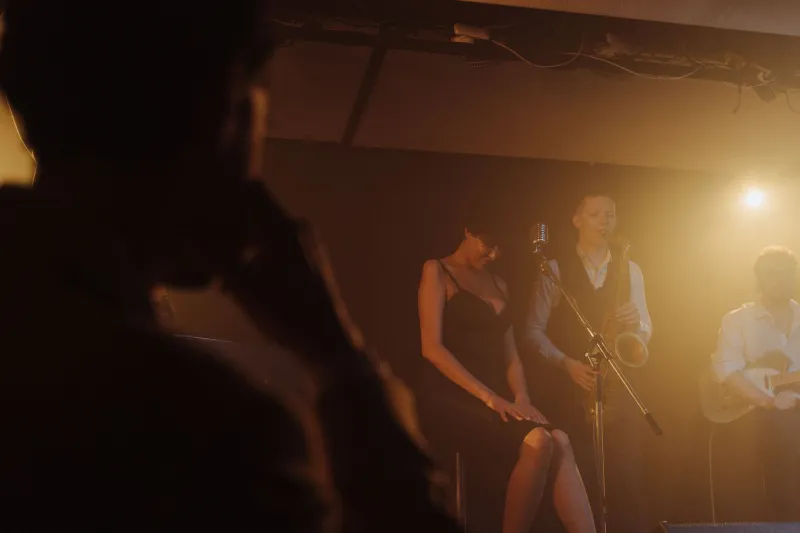
Now think about the last time you caught something at a local Waterstown venue. Maybe you knew someone in the band. Maybe the person next to you was your kid's teacher. Maybe the artist took a break between sets and ended up chatting with you for ten minutes about where to get good tacos in town. You paid fifteen bucks at the door. You drove five minutes. And you left feeling like something real had happened.
That gap — between the expensive night that underwhelmed and the cheap night that genuinely delivered — isn't a fluke. It's a pattern, and it's worth understanding.
The Price Tag Doesn't Set the Experience
There's a deeply ingrained assumption in American consumer culture that price and quality move together. Pay more, get more. It works for a lot of things. It doesn't work as cleanly for live entertainment as we've been conditioned to believe.
What you're paying for when you buy a premium concert ticket in a major city is largely infrastructure: the venue's overhead, the touring production costs, the management fees, the platform's service charges, the artist's travel and accommodation across forty-seven cities. A meaningful chunk of that ticket price has nothing to do with the quality of your specific experience on that specific night. You're subsidizing a machine.
In Waterstown, that machine is much smaller. Overhead is lower. Artists aren't traveling across the country. Venues aren't paying for 10,000-seat capacity on a night when 400 people show up. The economics are leaner, which means more of what you pay actually connects to what you experience. That's not a consolation prize for living somewhere small. That's a structural advantage.
The Accessibility Factor Is Real
One of the most underrated elements of small-town entertainment value is artist accessibility — the degree to which you can actually interact with the people performing for you. And this matters more psychologically than most people consciously recognize.
Research on audience experience consistently shows that perceived connection to a performer dramatically increases how much people enjoy and remember a show. When an artist makes eye contact with you, when they remember a face from a previous show, when they stick around after the set and have a real conversation — that's not a bonus feature. That fundamentally changes the nature of the experience. You weren't a consumer that night. You were a participant.
In a 3,000-seat arena, that kind of connection is basically impossible by design. The scale of the thing prevents it. In a Waterstown venue where the artist can actually see your face, where the crowd is small enough that the performer knows when the room is with them and when it isn't, the whole dynamic shifts. The show becomes a conversation instead of a broadcast.
What "Production Quality" Actually Means to an Audience
Here's a question worth sitting with: when you walk away from a show feeling genuinely moved, how much of that feeling came from the production value?
For most people, the honest answer is: not that much. The sound system matters up to a point — if it's genuinely bad, it's distracting. But beyond a reasonable baseline, additional investment in production tends to deliver diminishing returns on actual audience satisfaction. What people remember is whether the music hit them, whether they felt something, whether the room had energy, whether they were glad they came.
Waterstown venues generally clear the baseline without much trouble. And then they compete on all the things that production budgets can't buy: the intimacy, the warmth, the sense that you're somewhere specific rather than somewhere generic, the feeling that the person on stage actually wants to be in this room rather than just in a room.
That specificity is genuinely hard to manufacture at scale. It's not something you can solve with a bigger lighting rig.
The Welcome Factor
There's an intangible quality to good local entertainment that I'd call the welcome factor — the degree to which a venue and its programming make you feel like you belong there. And it's more economically significant than it sounds.
When people feel genuinely welcomed somewhere, they spend more, they come back more often, they tell more people about it, and they forgive minor imperfections more readily. Hospitality researchers have documented this extensively in the context of restaurants and hotels, but it applies just as directly to entertainment venues. The experience of feeling like a valued regular rather than an anonymous ticket sale changes every aspect of how a night gets processed and remembered.
In a city, most venues are structurally incapable of delivering this on a consistent basis. The turnover is too high, the staff too stretched, the crowd too anonymous. In Waterstown, the bartender knows what you drink. The venue owner thanks you by name. The artist recognizes you from the last three shows. That's not small — that's the whole ballgame.
Rethinking What "Better" Actually Means
The assumption that big-city entertainment is inherently superior to what's available in smaller communities is worth challenging directly, because it shapes decisions in ways that don't always serve us well. It's the reason people drive two hours and spend three times as much money for an experience that, if they're honest, wasn't actually better than what they could have had at home.
Better is a subjective word. If better means larger, louder, and more expensive, then sure — the city wins on those metrics. But if better means more memorable, more personal, more likely to leave you feeling genuinely glad you went out that night, the calculus looks completely different.
Waterstown entertainment isn't a compromise. It's a different set of priorities — and for a lot of us, it turns out those priorities line up pretty well with what we were actually looking for all along.