After the Amps Cool Down: Why Waterstown's Best Conversations Happen at Last Call
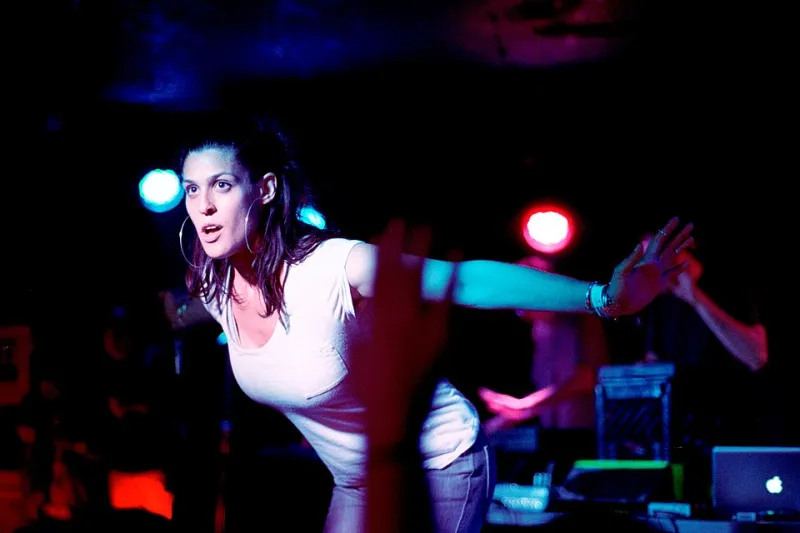
Photo: voetshy, CC BY-SA 2.0, via Wikimedia Commons
The show ends the way it always ends. The last chord rings out, the drummer does the little cymbal flourish, somebody in the front row whistles, and the singer says thank you into a microphone that's already being coiled by a stagehand.
Then the lights come up, and the crowd does what crowds do: grabs a jacket, checks a phone, drifts toward the door.
And then there's the other room. The one that doesn't empty. The one that fills up with the people who aren't in a hurry — the bartender counting the register, the door guy stacking stools, the bassist rolling cables, the three regulars who always end up talking to the sound engineer for twenty minutes longer than they planned.
That's the part of a Waterstown night out that nobody writes about. I'd argue it's the part that matters most.
The fifteen minutes nobody photographs
When people describe a great night out, they describe the peak — the song, the moment, the crowd singing back. Fair enough. That's the product. That's what the ticket was for.
But the peak is a performance, in every sense of the word. Everyone in the room is playing a role, and so is everyone on the stage. The real information doesn't come out until the roles come off.
At last call, the hierarchy flattens. The headliner is now just a person helping fold a tablecloth. The person who bought the most expensive seat in the house is now standing next to the person who swept the floor, and they're both laughing at the same joke. That's not a small thing in a town this size — it's the mechanism by which a scene stays a scene instead of turning into a group of people who happen to buy tickets near each other.
What the staff knows that the crowd doesn't
Here's an underrated observation: the closing-time crowd is the most accurate map of who actually holds a town's entertainment scene together.
It's rarely the biggest names. It's the people who know which speaker cuts out in the left corner, who can name the last three touring acts that slept on somebody's couch, who remember which bartender got a local band their first paying gig. They know who's struggling, who's about to break, who's thinking about moving away and who's thinking about coming back.
They also tell you things you'd never learn from a poster. That a certain Tuesday residency is quietly one of the best nights in town. That a particular venue's new owner is getting it right. That a local act's new record is a serious leap forward. That somebody's van broke down and the scene is passing a hat.
That's not gossip. That's the informal economy of a music community, running on the same fifteen minutes every night.
Why this is a Waterstown story specifically
In a bigger market, closing time is anonymous. You finish your drink, you hit the street, and you're one of thousands of people doing the exact same thing. Nobody's going to notice whether you stayed or left.
In Waterstown, they notice. And that cuts both ways — it can feel like a fishbowl if you're not in the mood for it. But it also means the scene has something the big cities structurally can't replicate: continuity. The same faces, week after week, long enough that people actually become something to each other instead of a rotating audience.
That continuity is why a touring act will remember a Waterstown stop and ask to come back. It's why a local player gets a last-minute sub gig because they happened to be standing in the right room in February. It's why a bartender who's been working the same bar for six years can walk a first-timer through the entire history of local music in the time it takes to close out a tab.
The case for staying ten minutes longer
I'm not suggesting you linger until they turn the chairs upside down on the tables. There's a difference between being part of the room and being in the way.
But there is a real argument for padding your exit by ten minutes. Introduce yourself to somebody you didn't come with. Thank the person who took your coat. Ask the sound engineer a question. Tell the opening act you liked their second song — they'll remember it for months, and you'll get a piece of information about the scene that no listing will ever give you.
The most valuable thing about living in a town with a live-music culture this committed isn't the acts that come through. It's the fact that the community around them is small enough to actually join. And joining doesn't happen during the set. It happens afterward, in a half-lit room, while somebody coils a cable and asks whether you were at the show last week.
So next time the encore ends and the lights come up, don't sprint for the door. Stand there for a minute. That's where the scene actually lives — after the last song, before the last light.