Forget the Spectacle: Why Americans Are Falling Back in Love With Entertainment That Actually Knows Their Name
The Numbers Don't Lie, Even When They're Surprising
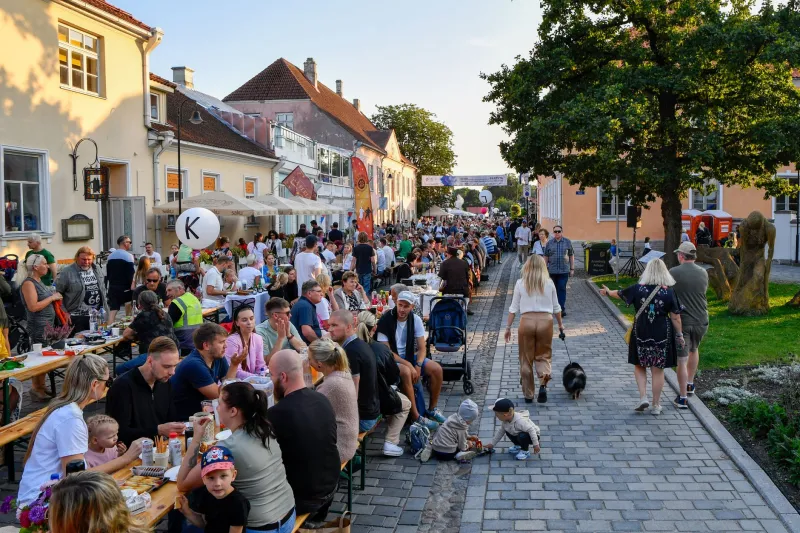
Streaming subscriptions are plateauing. Live mega-event ticket prices have pushed large portions of the middle class out of the market entirely. Meanwhile, local venue attendance is quietly ticking upward in small and mid-size communities across the country. Farmers markets double as concert venues. Library programming is oversubscribed. Community theater productions are selling out weeks in advance.
This is not a coincidence, and it's not nostalgia. It's a recalibration.
America's relationship with entertainment is changing in ways that cultural critics and marketing analysts are still scrambling to fully articulate. But if you spend time in a place like Waterstown — where the entertainment scene is built on relationships, participation, and genuine community investment — the shift makes complete intuitive sense.
We've been living the answer to a question the rest of the country is only now starting to ask.
From Passive Consumption to Actual Participation
For most of the past century, the dominant model of American entertainment was essentially one-directional. Professionals performed. Audiences consumed. The gap between the two was the point — it signified quality, aspiration, a separation between the extraordinary and the everyday.
That model worked beautifully for a long time. And then, gradually, it started feeling hollow.
Researchers studying entertainment behavior have noted a consistent pattern emerging over the past decade: audiences increasingly report that connection is the metric they're optimizing for, not production quality. In study after study, when people describe their most memorable entertainment experiences, they reach for words like "real," "personal," "unexpected," and — most tellingly — "like they were talking to me."
Those words describe a Waterstown open mic night a lot more accurately than they describe a stadium tour.
"There's a real hunger for experiences where the fourth wall is basically nonexistent," said one cultural trends researcher whose work focuses on community-based entertainment economies. "People don't just want to watch something great. They want to be present for something that couldn't have happened without them in the room."
That's a fundamentally different value proposition than what Hollywood or Nashville or Broadway is selling. And it's one that small communities have been delivering for generations without quite realizing they were ahead of the curve.
The Authenticity Economy (And Why It Keeps Winning)
The word "authentic" has been so thoroughly co-opted by marketing departments that it's almost lost its meaning. But strip away the branding language and the underlying concept still points at something real.
People are increasingly good at detecting performance — the kind that exists to manufacture a feeling rather than actually have one. Social media, paradoxically, has made us both more saturated with performed authenticity and more sensitive to the real thing when it shows up.
Local entertainment, at its best, can't fake it. When a Waterstown musician gets up at a community event and plays a song they wrote about growing up two miles from where you're sitting, there's no PR apparatus softening the edges. When a local comedian bombs a joke in front of people who are going to see them at the grocery store on Saturday, the recovery is real. When a crowd of people who share a zip code, a school district, and decades of overlapping history come together to celebrate something, the energy in that room is not replicable by any production budget.
That's not a small thing. That's actually the whole thing.
Celebrity Fatigue Is Real, and It's Reshaping Priorities
There's also something worth naming directly: a lot of Americans are genuinely tired of celebrity culture as the organizing principle of entertainment.
This isn't anti-celebrity sentiment exactly — it's more like a growing awareness that the celebrity entertainment model requires audiences to care deeply about people they will never meet, in contexts that have nothing to do with their actual lives. For a while, that trade-off felt worth it. Increasingly, it doesn't.
When you can watch someone you went to school with perform something they wrote, or support a local filmmaker's project, or attend a reading by a writer who grew up in the same town — the emotional return on investment is completely different. The stakes are real. The context is shared. The relationship, however loose, actually exists.
"I'd rather spend twenty dollars watching someone from here do something incredible than two hundred dollars watching a celebrity do something I've seen them do on every tour for the last decade," is a sentiment that comes up, in various forms, in conversations all over Waterstown. It's not unique to us. It's becoming a mainstream American attitude.
What This Means for Places Like Waterstown
Here's the honest truth: communities like ours are not going to replace the entertainment industry. Nobody's canceling their streaming services because of a great local show. The cultural shift happening right now isn't about rejection — it's about supplementation, about people building a more layered entertainment diet that includes the local and participatory alongside the global and produced.
But in that layered diet, the local stuff is becoming more valuable, not less. And towns that have maintained strong community entertainment cultures — that never let the local stage go dark, that kept investing in the kinds of spaces where real moments happen — are finding themselves sitting on something that larger markets are actively trying to recreate from scratch.
Waterstown has always understood, maybe without articulating it this way, that entertainment is fundamentally a social act. It's about being in a room with other people and experiencing something together. The screen in your pocket can deliver a lot of things. It cannot deliver that.
The rest of America is catching up to what we already knew.
The Shift Is Here. The Question Is What We Do With It.
If there's a challenge embedded in this cultural moment, it's one of stewardship. The community spaces, the local stages, the venues that make participatory entertainment possible — they require investment, attention, and the kind of consistent community support that doesn't always show up automatically.
Showing up matters. Buying the ticket, attending the event, sharing the post, telling a friend — those small acts are what sustain the ecosystem that's quietly becoming one of the most valuable things a community can have.
Waterstown's entertainment scene isn't just a nice local amenity. It's a living argument for a different way of experiencing culture. And right now, a lot of America is starting to listen.