Home Wasn't a Step Backward: The Real Reasons Creative People Are Choosing Waterstown Over the City
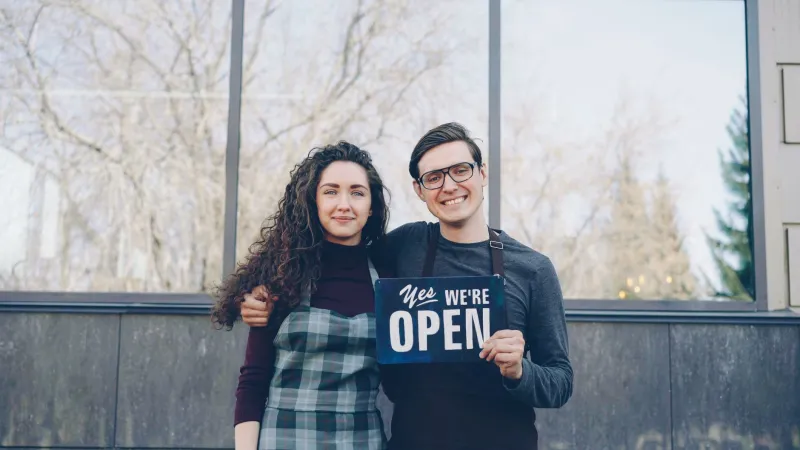
Ask someone who grew up in a small town about their plans and the answer used to be pretty predictable. Get out. See the world. Do something big somewhere bigger. For a certain generation, leaving was practically a rite of passage — proof that you had ambition, that you weren't content to stay put, that you were going places.
Something is shifting. And Waterstown is one of the places where that shift is showing up most clearly.
The Return That Wasn't a Retreat
Sophie Marchetti spent six years in Philadelphia after college. She worked in arts administration, built a solid professional network, saw incredible shows, ate at restaurants she still thinks about, and was genuinely happy for most of it. Then she came back to Waterstown.
"Everyone assumed I'd failed at something," she says with a laugh. "Like, what happened? Did it not work out? And I had to explain, no — it worked out great. I just decided I wanted something different. I decided I wanted this."
What "this" looks like for Sophie is a creative consultancy she runs from a home office, a seat on the board of a local arts organization, and a social life built around Waterstown's entertainment scene that she describes as richer and more meaningful than anything she had in the city.
"In Philadelphia, I went to a lot of events. I knew a lot of people. But I didn't really know anyone, if that makes sense. Here, I go to half as many shows but I actually experience all of them. I'm not performing being a person who goes out. I'm just... out."
That distinction — between performing a lifestyle and actually living one — keeps coming up when you talk to people who've made this choice.
What the City Doesn't Tell You
Major cities are genuinely extraordinary places. That's not up for debate. But there are real costs to big-city creative life that don't show up in the Instagram version of the story.
The financial pressure alone changes how you relate to your creative work. When half your income goes to rent, every creative project has to justify itself economically. The side hustle becomes the main hustle. The passion project gets shelved because you can't afford the time it takes. You start making practical decisions that accumulate into a life that looks like yours but doesn't quite feel like it.
And then there's the noise. Not just literal noise, though that's real too — but the constant competition for attention, the feeling that everyone around you is also trying to make it, the sense that the city's creative ecosystem is simultaneously abundant and zero-sum.
Devin Castillo left a marketing job in Austin two years ago and came back to Waterstown, where he now does freelance creative work and plays in a band that's built a genuine regional following.
"Austin has an incredible music scene. It also has 400 bands trying to get the same ten gigs. Here, if you're good and you show up, you work. It's that simple. I'm playing more now than I ever did when I lived in a city famous for its music."
The Entertainment Scene Nobody Expected
Part of what's drawing people back — and keeping them here — is a Waterstown entertainment scene that has quietly become something genuinely worth staying for.
It's not trying to be Austin or Nashville or Brooklyn. It doesn't need to be. What Waterstown has developed is its own distinct culture — venues that feel like they belong to the community rather than to corporate entertainment groups, a calendar of events that reflects actual local tastes rather than algorithmic trend-chasing, and an audience that shows up ready to be present rather than ready to be seen.
For creative professionals who spent years in major markets, this is often the unexpected selling point. Not that Waterstown has more entertainment options, but that the options it has feel more worth having.
"I went to so many shows in New York where I felt like I was watching people watch the show," says Priya Nandakumar, a graphic designer who returned to Waterstown after five years in Manhattan. "Everyone was on their phones, everyone was positioned for photos. Here, people are just there. They're actually watching. It makes you feel like what's happening on stage matters, which makes it matter more."
What Comes Back With Them
The returnees aren't coming back empty-handed. They're bringing skills, networks, perspectives, and professional experience that are actively enriching Waterstown's cultural landscape.
Sophie's arts administration background has already influenced how a local venue approaches artist hospitality and community programming. Devin's marketing instincts have helped two Waterstown businesses build social media presences that actually work. Priya has designed materials for local events that look like they came from a major city agency — because they kind of did.
This exchange is one of the most interesting dynamics of what's been called the reverse brain drain. Small towns historically lost their most ambitious young people to cities and received little in return. Now those people are coming back, and they're bringing the city with them — just the good parts.
The result is a Waterstown that's genuinely evolving. Not in ways that erase what made it worth returning to, but in ways that add layers, options, and energy that make it even more compelling to the next wave of people reconsidering their choices.
The Story Waterstown Is Writing
There's a larger cultural narrative forming here, and Waterstown is one of its most interesting chapters. The idea that creative success requires a specific geography — that you have to be in a major city to matter — is losing its grip. Remote work dissolved some of those barriers. The pandemic accelerated the recalibration. And places like Waterstown are proving that a rich, meaningful, professionally viable creative life is possible well outside the obvious zip codes.
The people coming back aren't giving up on their ambitions. They're redefining what those ambitions look like and what achieving them actually requires. They're discovering that a smaller stage can mean a bigger life. That knowing your audience personally is a feature, not a limitation. That home, it turns out, was never the problem.
It was always an option. They just needed to see the rest to understand it.